
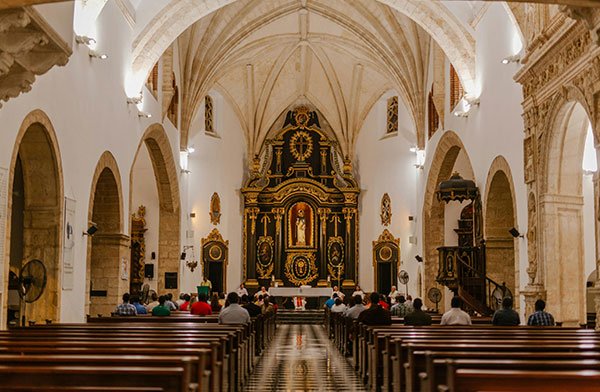
So you’re curious about Catholicism. Maybe you’re dating someone Catholic, maybe you just walked past a cathedral and got curious, or maybe you’re binge-watching a show with a lot of nuns in it. Whatever brought you here, welcome. Let’s break down the basics without the Latin and without making you sit through a three-hour service to figure it out.
At its core, Catholicism believes in one God who exists as three persons: the Father, the Son (Jesus), and the Holy Spirit. This is called the Holy Trinity, and no, we don’t believe in three gods. Think of it less like math and more like how you can be a parent, a sibling, and a friend all at once, except way more mysterious and way less explainable at a dinner party. We believe Jesus is God’s son who came to Earth, died, and rose from the dead to save humanity from sin. That resurrection part is the big one. It’s the whole reason Easter exists, and it’s the reason Sunday matters so much to us.
Here’s where Catholicism gets a personality of its own compared to other Christian branches. We believe the Church itself, guided by the Pope and tradition, plays a huge role in interpreting faith, not just the Bible on its own. We practice seven Sacraments (baptism, confirmation, communion, confession, marriage, holy orders, and anointing of the sick) which are basically sacred checkpoints throughout life. Communion is a big deal too. We believe the bread and wine actually become the body and blood of Christ during Mass. It’s not symbolic to us, it’s the real deal, and that belief shapes a lot of the reverence you see in Catholic churches.
We also lean heavily on the Saints and Mary, the Mother of Jesus, asking them to pray on our behalf, kind of like asking a well connected friend to put in a good word for you. None of this replaces belief in God. It just adds layers of community and tradition that make Catholicism feel less like a solo journey and more like a family reunion that’s been going on for two thousand years, complete with its own rituals, holidays, and yes, a few relatives you don’t fully understand but respect anyway.
This is just the surface, though. If you want to go deeper, poke around the other sections on this site. We’ve got explanations on everything from why we baptize babies to what actually happens at confession, so keep exploring and let your curiosity lead the way.
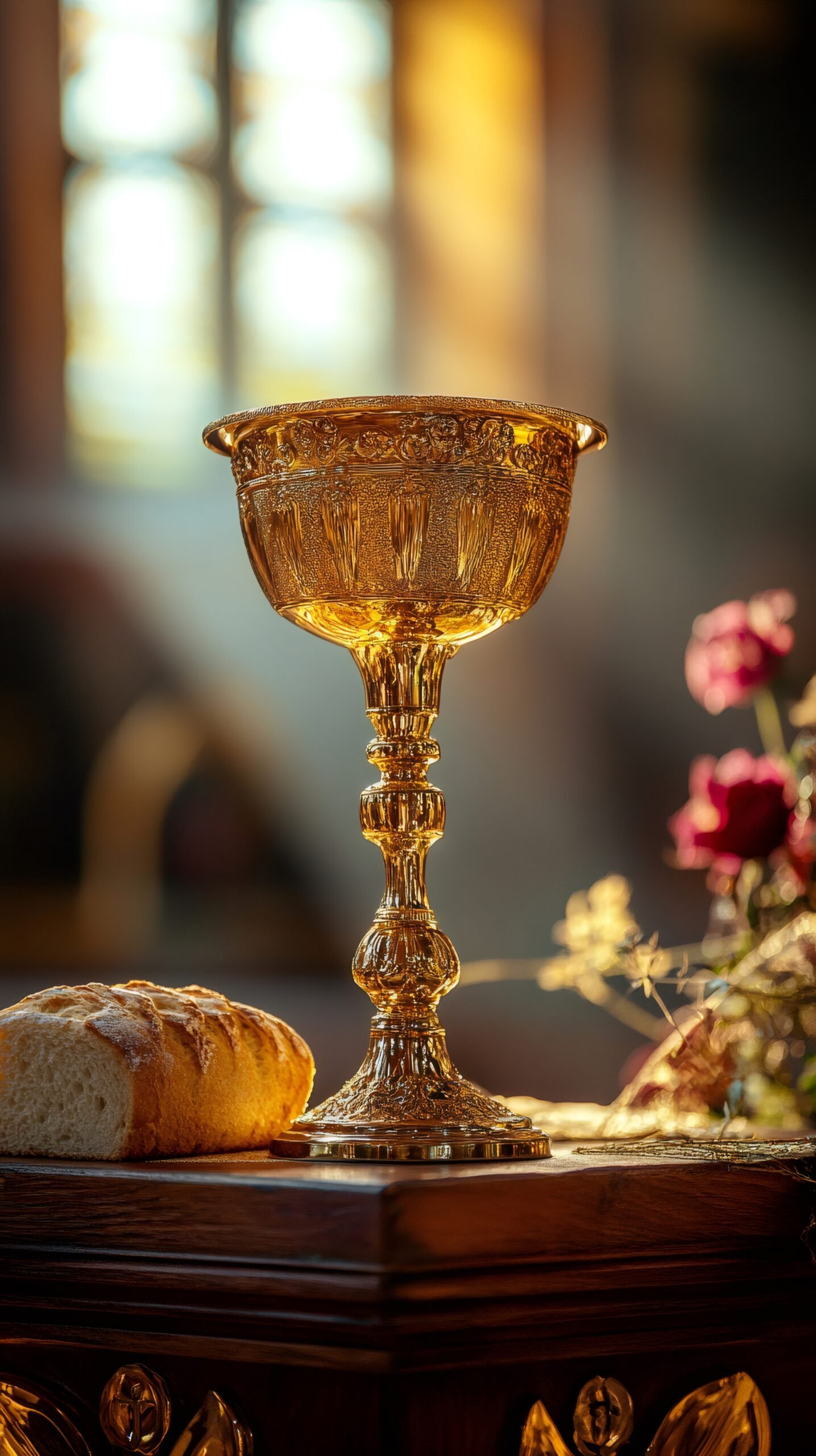
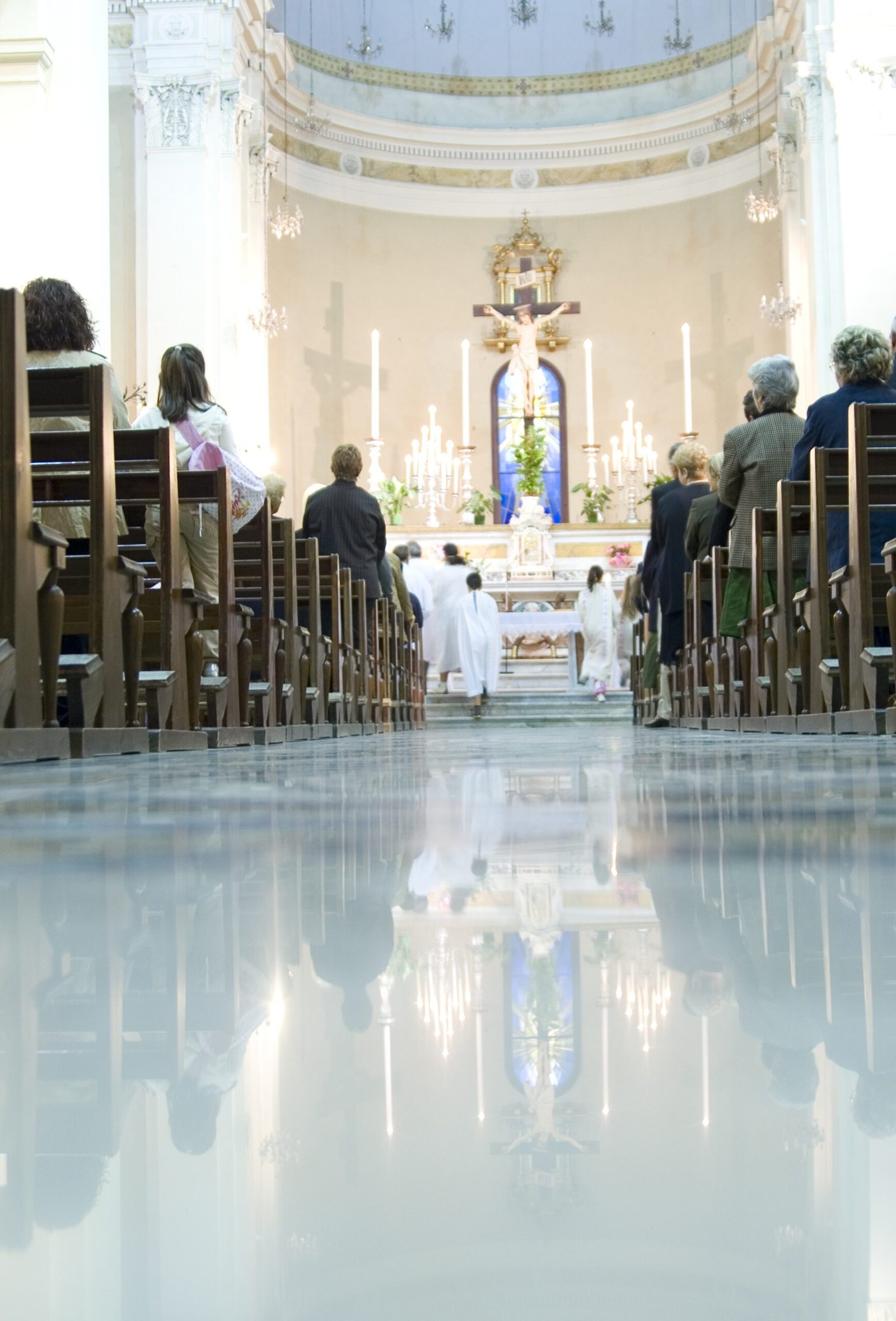
So you’re thinking about checking out Mass. That’s great news, and we mean that genuinely, not in a “we need more people in the pews” kind of way (though, okay, we won’t complain about that either). Walking into a Catholic church for the first time can feel a little intimidating, like showing up to a party where everyone knows the choreography except you. Don’t worry. Every single person in that building was a first timer once, including the priest.
Here’s the practical stuff. Find a local parish, check their website or call ahead for Mass times, and just show up a few minutes early. You don’t need to dress up in a suit or a fancy dress, but skip the gym clothes and flip flops out of respect for the space. Grab a seat toward the back if you want to observe without feeling like all eyes are on you, though honestly, nobody’s watching you that closely. We promise. You’ll notice people standing, sitting, and kneeling at different points. Just follow along as best you can, or stay seated if you’re unsure. Nobody’s grading you on your squat form here.
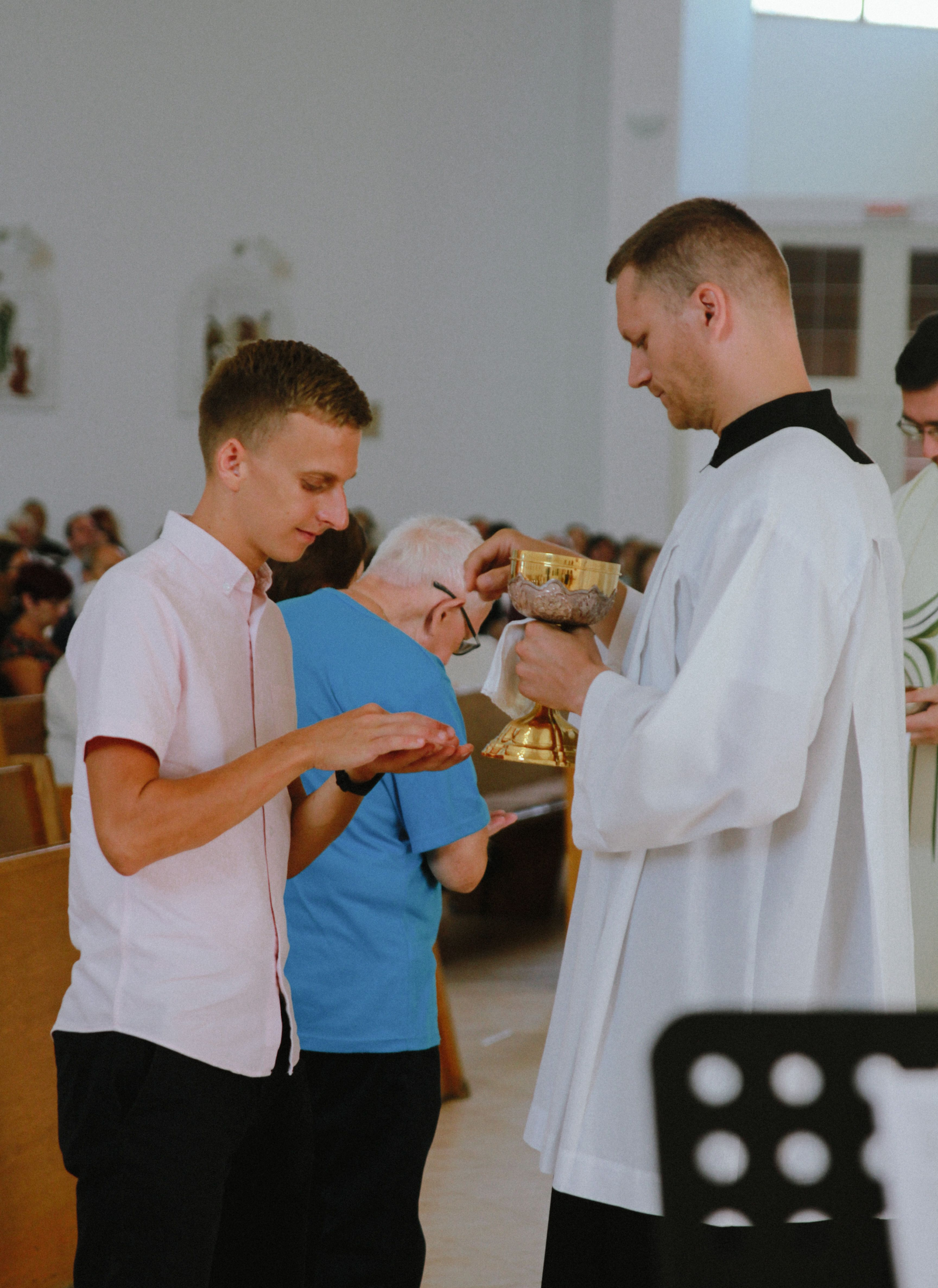
Now for the one thing you really need to know: Communion. During Mass, we walk up in a line to receive the Eucharist, which we believe is the actual body and blood of Christ. It’s the most sacred part of the celebration for us, and it’s reserved for Catholics who’ve gone through the process of joining the Church (usually through baptism and a program called RCIA, now often called OCIA). If you’re not there yet, that’s completely fine. When it’s time for Communion, you’re welcome to stay in your seat or come up with your arms crossed over your chest to receive a blessing instead. Priests and ministers are used to this and won’t skip a beat.
Think of your first Mass as an open house, not a final exam. You’re allowed to just watch, ask questions afterward, and come back as many times as you want before deciding anything. We built this whole thing to be a journey, not a pop quiz, so take your time and see how it feels. And hey, if you want to understand more of what’s happening during Mass or why we do what we do, poke around the other sections on this site. There’s plenty more where this came from.
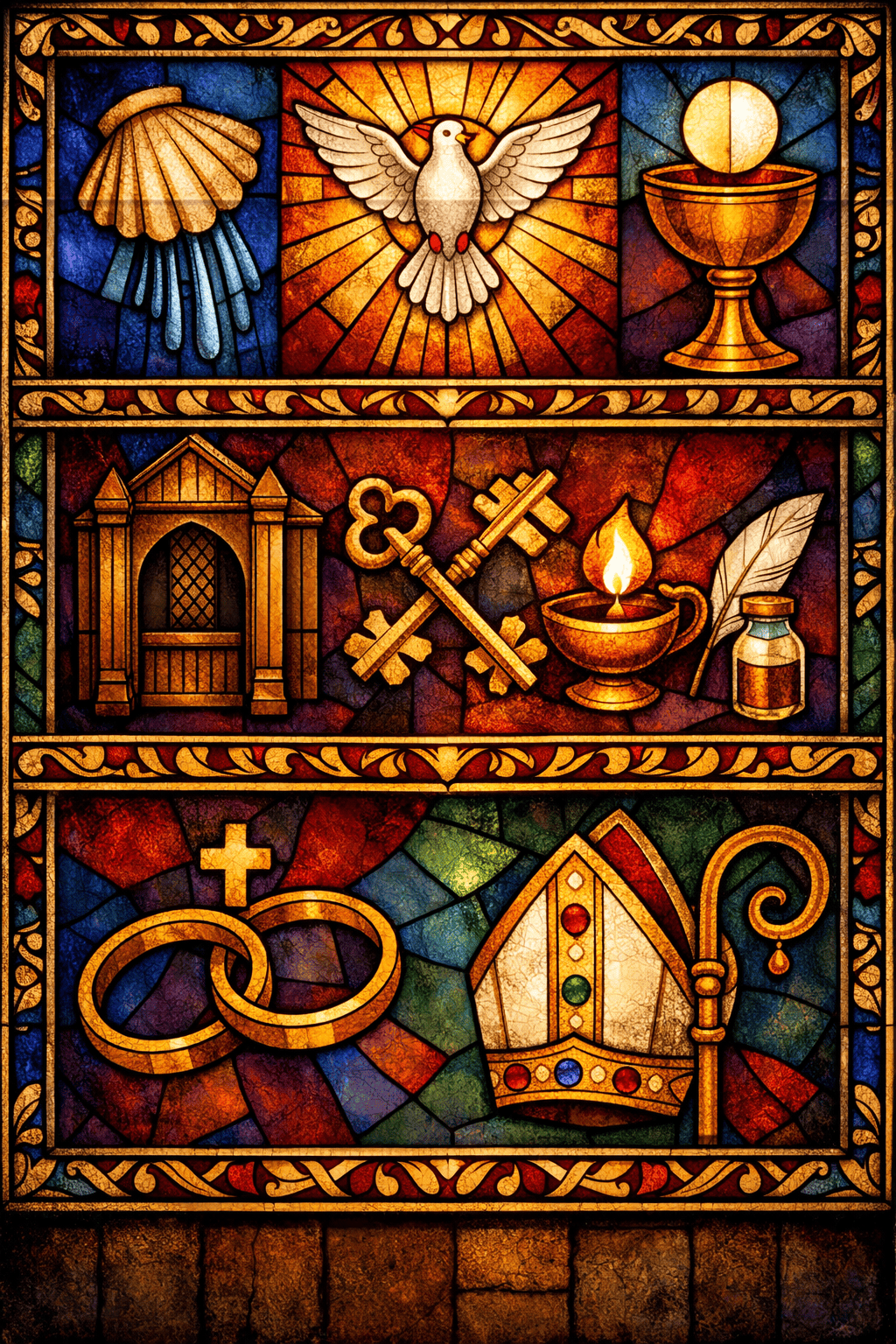
Catholics love a good structure, and the Sacraments are proof of that. Think of them as sacred milestones that mark the big moments in a Catholic’s life, kind of like spiritual checkpoints, except instead of saving your progress in a video game, you’re deepening your relationship with God. There are seven total, and we group them into three categories: initiation, healing, and vocation. Let’s walk through each one so you’re not lost the next time someone mentions confirmation and you nod along pretending you know what that means.
First up, the Sacraments of Initiation, which welcome you into the Catholic faith. Baptism comes first, usually as a baby, and it washes away original sin while officially welcoming you into the Church family (yes, even if you cried through the whole thing, we still count it). Next is Confirmation, which happens later, often in the teenage years, and it’s basically you saying “yeah, I meant it” about the faith your parents chose for you as an infant. Then there’s the Eucharist, or Communion, which we talked about in another section. It’s the ongoing nourishment that keeps us connected to Christ every time we go to Mass. Here’s the key thing to remember about all three: you receive each one only once. No repeats, no do-overs, just one and done, because they mark you permanently as part of the body of Christ: the Church.
Next, we’ve got the Sacraments of Healing, and honestly, these are the ones that remind you Catholicism gets that life is messy. Confession, also called reconciliation, is where you sit down with a priest, admit where you messed up, and walk away with a clean slate. No, the priest doesn’t gasp dramatically or judge you. He’s heard it all before. No, seriously, he has! Then there’s Anointing of the Sick, which is exactly what it sounds like: a sacrament for people who are seriously ill or facing surgery, offering comfort, strength, and healing, whether physical or spiritual. Unlike initiation, you can receive both of these as many times as you need them. Mess up again next week? Confession’s still open. Get sick more than once in your life? Anointing’s there for you again. The early Church fathers built these two sacraments knowing you’d need a refill more than once.
Finally, the Sacraments of Vocation help you figure out your path in life. Marriage is one, where two people commit to each other and to God in a lifelong partnership (and yes, we take the “lifelong” part seriously). Holy Orders is the other, and it’s how men become deacons, priests, or bishops, dedicating their lives to serving the Church. Only men can receive holy orders, which is a distinction we know raises questions, and we cover the reasoning behind it in more depth in another section, so we won’t try to squeeze that whole conversation in here. Technically, both of these sacraments are received only once too, since the Church doesn’t grant do-overs on lifelong commitments, but there’s a lot more nuance to that (like annulments and other exceptions) that deserves its own explanation elsewhere on this site. Not everyone receives both of these sacraments, but everyone is called to at least one of them, whether that’s marriage, priesthood, or a life dedicated to God in another way.
If you want the deeper dive into any of these seven, we’ve got sections all over this site ready for you to explore.
These are some of the questions we hear most often from people just getting to know Catholicism, so let’s tackle them head on.
Nope, and this one comes up a lot. We honor Mary as the mother of Jesus and ask for her prayers, kind of like asking your grandma to pray for you because she’s got a direct line and decades of experience. Worship is reserved for God alone. Mary gets major respect, not a throne next to the Trinity.
We believe Mary was preserved from original sin (there’s that phrase again) from the moment she was conceived, a belief called the Immaculate Conception (not to be confused with the virgin birth of Jesus, a common mix-up). As for “Queen of Heaven,” think of it like this: if your son were king, you’d probably get a title too. It’s about her unique role as Jesus’s mother, not a promotion to divine status.
We don’t skip God, we just believe in asking for backup. Saints are people who lived holy lives and are now in heaven, so we ask them to pray for us the same way you’d ask a friend to pray for you during a hard week. Think of it as a really extensive prayer chain that happens to include people like St. Francis and St. Teresa.
It’s not a popularity contest, though it does take a while. The Church investigates a person’s life for holiness, and yes, there’s usually a miracle or two required along the way, verified through a pretty rigorous process. It can take decades, sometimes centuries. So next time you think your paperwork is slow, imagine waiting 300 years for a promotion.
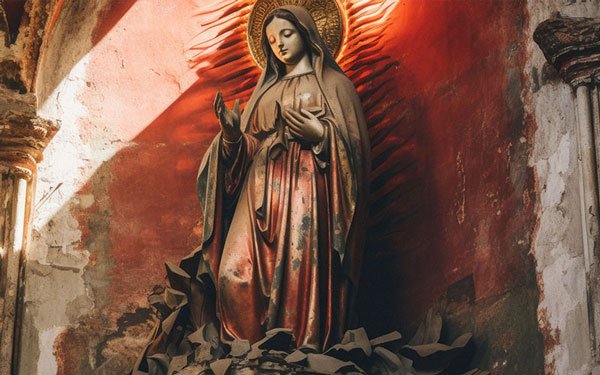
Fair question, and we get why it looks that way from the outside. A statue of Mary is a lot like a photo of your family on your desk. You’re not worshiping the photo; you’re honoring the person it represents, and it helps you feel closer to them. Nobody’s prostrating themselves before a chunk of plaster and calling it a god. It’s a visual reminder, not a replacement for God.
Kind of, but with way better hats and a much longer job security clause (it’s for life). The Pope leads the worldwide Catholic Church and is considered the successor to St. Peter, one of Jesus’s original apostles. He handles major decisions about doctrine and unity, but he’s not making laws or running a country, unless you count Vatican City, which, fun fact, he technically does.
We know this one sounds wild, so let’s clear it up. The Pope isn’t sinless, he goes to confession like the rest of us. The belief is that under very specific conditions, when he formally defines a teaching on faith or morals for the whole Church, he’s protected from error. That’s called infallibility, and it applies way less often than people assume. It’s not a superpower he uses at brunch.
We know you’ve probably got a dozen, okay hundreds, more questions bouncing around after reading all this, and that’s a good thing. Take some time to explore the rest of the website, we’ve packed it with more explanations on everything from the sacraments to why we do what we do at Mass. And if you dig around and still can’t find what you’re looking for, just drop us a line. We’d genuinely love to help you figure it out.
So it’s been a while. Maybe a few years, maybe long enough that you’re not totally sure if the little screen thing is still a thing (spoiler: it is, but you can also sit face-to-face now if that feels less like an interrogation). Whatever the reason you stepped away, we’re not here to make you feel bad about it. Confession exists specifically for people who’ve been away, have messed up, or just plain forgot to show up. You’re not the first person to walk back in after a long break, and you definitely won’t be the last.
Here’s what you actually need to do. Find a parish that offers confession (most list times on their website) and just show up. You don’t need an appointment or a permission slip. When it’s your turn, you can start with the classic “Bless me Father, for I have sinned, it’s been [insert embarrassingly long number here] since my last confession.” That’s it. That’s the opener. Priests hear this literally every day, so you’re not shocking anyone. Just be honest about what’s been going on in your life since then. No need to have a perfectly organized list, just talk like you’re catching up with someone.
The priest isn’t there to lecture you or make you relive every regret in dramatic detail. He’ll probably ask a few questions, offer some guidance, and give you a penance, usually a few prayers or a small action to help you reset. Then he’ll say the words of absolution, and just like that, you’re square with God again. No fees, no forms, no fine print. It really is that simple, even if your nerves are telling you otherwise.
If you’re still feeling anxious about it, that’s completely normal, and it usually fades the second you’re actually sitting there. Consider bringing a short list of what you want to mention if memory’s an issue, and know that priests keep everything you say completely confidential, no exceptions. Once you’re back in the habit, confession tends to feel less like a courtroom and more like hitting the reset button on your week.
If you want more on what to expect or how to prepare beforehand, check out the How to Go to Confession guide in the Resources section on this site. We’ve got you covered every step of the way back.
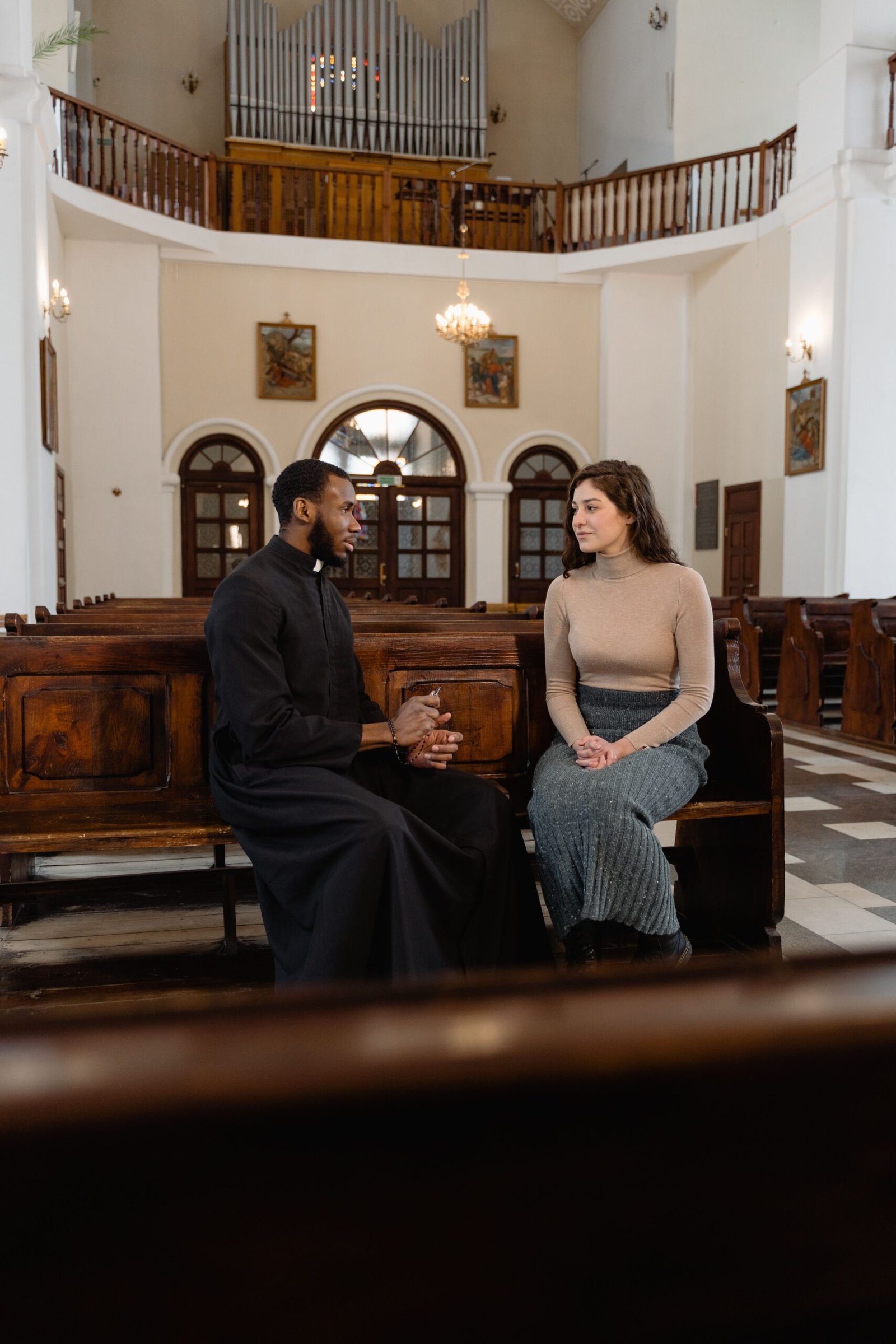
Coming back to Mass after a long break is a little like returning to your hometown after years away. Some things feel exactly the same, and other things make you go “wait, when did that happen?” So let’s walk through what might feel different so you’re not standing there confused while everyone else seems to know some secret handshake you missed.
First, the words. If you left before 2011, you’ll notice the responses have changed. Instead of saying “And also with you,” we now say “And with your spirit.” There are a handful of other small wording tweaks throughout the Mass, all part of a translation update the Church rolled out to more closely match the original Latin. Nobody’s trying to trip you up; it’s just new muscle memory you’ll pick up within a couple of visits. Also, don’t panic if you fumble it the first time; the person next to you probably did too when it first changed.
You might also notice more lay people involved than you remember. Ordinary parishioners, not just priests, often serve as lectors reading Scripture, extraordinary ministers helping distribute Communion, and altar servers who might now include girls, not just boys. Music styles vary a lot by parish too, so don’t be surprised if you walk into one church with a full choir and organ, and another with a guy playing acoustic guitar. Both are completely normal, just different parish personalities.
As for Communion, you’ll still process up in a line, but you’ll see people receiving in the hand as well as on the tongue, and both are fine, so just do whatever feels right for you. Kneeling, sitting, and standing cues might feel slightly different depending on the parish, but you can always follow the people around you if you lose track. Honestly, the heart of the Mass, the readings, the Eucharist, the sense of gathering as a community, hasn’t changed a bit. The framework is still the same; we’ve just updated some of the wallpaper. Ease back in at your own pace, and it’ll feel familiar again faster than you think.
Finding a parish shouldn’t feel harder than finding a decent parking spot on a Sunday morning, so let’s make this easy. The United States Conference of Catholic Bishops (USCCB) runs a simple parish finder tool on their website where you just plug in your zip code and get a list of parishes near you, complete with Mass times and contact info. No guesswork, no driving around town squinting at church signs hoping one of them is Catholic.
Once you find a parish that fits your schedule, just show up. You don’t need to call ahead, register, or bring a permission slip, seriously, just walk in like you own the place (spiritually speaking). Click the button below to head over to the USCCB website and track down a parish near you. Your pew is waiting.

If your prayer life has been on pause for a while, you’re not alone, and you definitely don’t need to make up for lost time by praying three rosaries and reading the entire Bible this weekend. That plan lasts about a day and a half before you burn out completely. Think of restarting prayer like getting back into exercise after a long break. You don’t sprint a marathon on day one, you just put your shoes on and walk around the block.
Start small, and we mean genuinely small. Try just two minutes in the morning, saying a simple “good morning, God, help me get through today” before you even check your phone (a low bar, we know, but your phone will still be there in two minutes). The Sign of the Cross, a quick Our Father, or just sitting in silence for a minute all count. You’re not being graded on eloquence here. God isn’t handing out extra credit for fancy words, He just wants you to show up.
Once that starts feeling normal, add layers. Maybe you try the Examen at night, a simple reflection where you look back on your day and notice where you saw God, and where you didn’t. Maybe you pick up a rosary again, one decade at a time instead of feeling like you need to do the whole thing or nothing. Apps can help too if you like structure, plenty of them send reminders and walk you through daily readings so you’re not starting from a blank page every single day.
The real trick is consistency over intensity. Five honest minutes every day will do more for you than one dramatic hour that never gets repeated. Give yourself permission to be rusty, forgetful, and even bored sometimes. Prayer isn’t a performance, it’s a relationship, and like any relationship you’ve stepped back from, it just takes a little time to feel natural again. Show up imperfectly and consistently, and the rest tends to follow.
When you’re ready for some go-to prayers to lean on, swing by the Prayers section on the website. We’ve got a good collection there to help you build your routine back up.
If you’ve ever gotten into a conversation about “why Catholics believe things that aren’t explicitly in the Bible,” you’ve stumbled into one of the most misunderstood parts of Catholic teaching. Here’s the short version: Catholics don’t see Scripture and Tradition as competing teams, we see them as two parts of the same handoff. Think of it like a family recipe passed down through generations; some of it got written down in a cookbook at some point, but a lot of it was also taught hands-on, kitchen to kitchen, long before anyone wrote a word. Both are legitimate, and both come from the same source.
Scripture is the Bible, obviously, the written word of God, inspired and put together over centuries. Tradition, with a capital T so you don’t confuse it with “grandma’s Christmas cookie recipe” tradition, refers to the teachings and practices handed down from the apostles that never got fully written into Scripture but were preserved through the life of the Church. The apostles didn’t just write letters and disappear; they also taught, celebrated the sacraments, and passed on practices verbally that later generations continued. Some of that eventually got written down. Some didn’t, but Catholics believe both threads carry real authority because both trace back to the same apostolic source.
This is actually addressed directly in Scripture itself, which surprises people. In 2 Thessalonians 2:15, Paul tells believers to “stand firm and hold fast to the traditions you were taught, whether by an oral statement or by a letter of ours.” That’s basically the Bible saying “hey, some of this is written, some of it isn’t, hold onto both.” The Catholic Church didn’t invent this idea to get around inconvenient Bible verses, it’s built into the earliest Christian communities, long before anyone had agreed on which books even belonged in the Bible in the first place.
A good way to picture it: Scripture and Tradition aren’t two separate rivers, they’re one river with two ways of tracing its source. The Magisterium, which is just the teaching authority of the Church made up of the Pope and bishops, exists to interpret both faithfully and make sure nothing gets twisted or lost along the way over two thousand years. So when a Catholic teaching doesn’t have a direct one-line Bible verse attached to it, that doesn’t mean it’s made up, it likely means it comes from that living, apostolic Tradition working alongside Scripture, not instead of it.
None of this requires you to become a theology expert overnight, but understanding this relationship clears up a huge chunk of confusion people have about Catholic beliefs.
If you want to go deeper into how this all fits together, head over to the Catholic Teaching section on the website. We’ve got more resources there to help the pieces click into place.
If someone told you that a piece of bread and a sip of wine literally become the body and blood of Jesus during Mass, you’d probably raise an eyebrow. That’s a totally normal reaction, by the way. Even some of Jesus’ own followers had that exact reaction when He first said it in John chapter 6. A bunch of them actually walked away over this teaching, and Jesus didn’t chase after them going “wait, I meant it symbolically.” He let them leave. That should tell you how seriously Catholics take this one.
Here’s the core of it: Catholics believe that during Mass, when the priest consecrates the bread and wine, they truly become the Body and Blood of Christ. Not a symbol, not a nice metaphor, not a reenactment like a Thanksgiving play at church. The technical term is transubstantiation, which sounds like something out of a chemistry class, but really just means the substance changes even though the bread and wine still look, taste, and feel exactly the same. So no, you’re not going to bite into something that tastes like a burger; it’s still bread to your senses, but Catholics believe what it actually is has fundamentally changed.
This teaching goes all the way back to the Last Supper, where Jesus took bread and said “this is my body,” and took wine and said “this is my blood,” not “this represents” or “this symbolizes.” The early Christians took Him at His word, and this belief has been central to the faith for two thousand years, not some medieval invention someone added later to make Mass feel fancier. When you go to receive Communion, you’re not just going through a ritual motion, you’re receiving what Catholics believe is Jesus Himself, fully present, which is honestly a pretty wild thing to wrap your head around no matter how many times you’ve done it.
This is also why Catholics take receiving Communion seriously. We’re not taking a snack break in the middle of Mass. You’re asked to be in a state of grace, meaning no unconfessed serious sin standing between you and God, and you’re asked to fast for at least an hour beforehand out of respect, not because anyone’s trying to make you hungry on purpose. It’s less about following rules for the sake of rules and more about approaching something sacred with the reverence it deserves, kind of like how you wouldn’t casually stroll into a job interview in pajamas even if nobody explicitly told you not to.
Wrapping your mind around the Eucharist takes time, and that’s completely fine; plenty of lifelong Catholics still find it awe-inspiring rather than fully “figured out.” To go deeper into what happens during Mass and why each part matters, head over to the Mass and Sacraments section on the website. We’ve got more there to help all of this click into place.
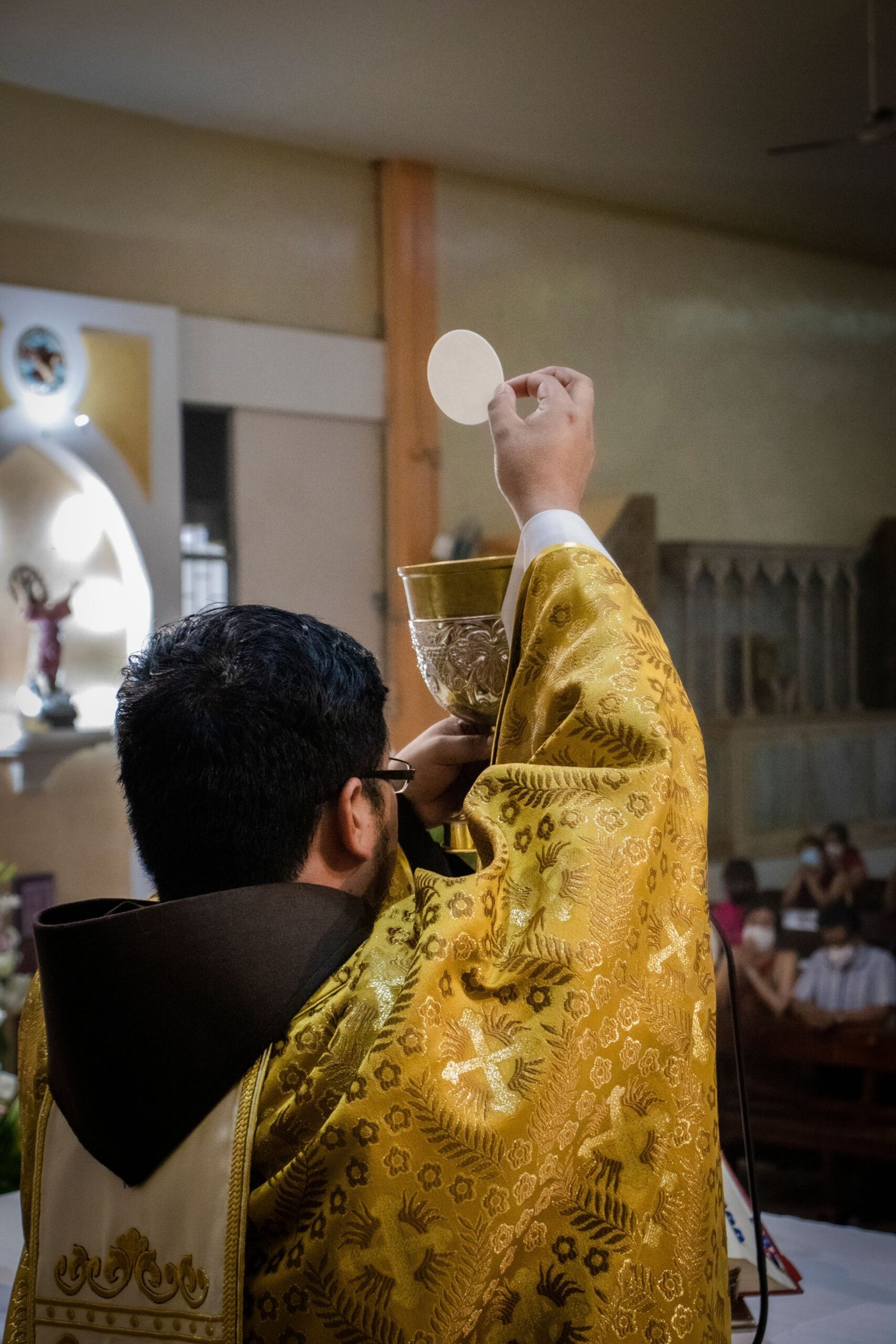
Let’s talk about one of the most argued about topics in Christianity without turning this into a theology debate that ruins Thanksgiving dinner. Catholics believe salvation isn’t something you earn like a badge for good behavior, and it’s not a one-time transaction you complete and then never think about again. It’s a relationship with God that starts with grace, which is basically God’s free gift of Himself, His life and help, given to you not because you deserve it but because He loves you. You didn’t do anything to make God love you, and there’s nothing you could do to make Him stop; that’s kind of the whole point of grace being a gift instead of a paycheck.
Here’s where Catholics part ways with a pretty common idea out there: the belief that simply saying the words “Jesus is my Lord and Savior” once is enough to lock in salvation forever, no matter what happens after. Catholics don’t teach that. Saying those words matters, don’t get us wrong, but salvation isn’t a magic phrase you recite like a password that unlocks heaven and then never needs to be thought about again. Jesus Himself directly pushes back on this idea in Matthew 7:21, saying, “Not everyone who says to me, Lord, Lord, will enter the kingdom of heaven, but the one who does the will of my Father.” That’s Jesus, not some strict church rule, telling us that declaring Him as Lord has to actually go somewhere, it can’t just live in a sentence you said once.
So here’s the practical version: Catholics believe you’re saved through grace, but that grace invites an ongoing response from you; it’s not something that just happens to you while you sit there passively. Think of it like being handed a plane ticket to somewhere amazing. The ticket is free, you didn’t earn it, but you still have to actually get on the plane, and honestly, stay on it. That “getting on the plane” part looks like faith, saying yes to God, and cooperating with His grace in how you live, including the sacraments, prayer, and, yes, actually trying to be a decent person. James chapter 2 puts it bluntly: faith without works is dead. Not “less impressive,” dead. Catholics take that seriously, not because we think good deeds buy our way into heaven, but because real faith naturally shows up in how you live, the same way actually loving someone shows up in how you treat them, and not just in how you feel about them privately or what you once said out loud.
This is also why Catholics don’t treat salvation as a done deal the moment you say a prayer once and move on with your life. It’s ongoing, a daily yes, not a one-time signature on a form. That doesn’t mean you’re on some anxious hamster wheel trying to earn God’s approval every single day; grace isn’t running out, and God isn’t tallying up your mistakes waiting to disqualify you. It just means the relationship stays active, kind of like a marriage doesn’t end after the wedding day just because you said “I do” once; you keep showing up for it. Catholics call this “cooperating with grace,” which is a fancy way of saying God does the heavy lifting, but you still have to participate rather than watch from the sidelines.
None of this means you need to have it all figured out or maintain some flawless streak to be saved. Grace covers the gap, that’s literally what it’s for. God isn’t looking for perfect, He’s looking for willing, and honestly showing up imperfectly but sincerely beats staying away because you think you’re not good enough yet.
If you want to dig deeper into how grace works, what the sacraments have to do with it, and how Catholics understand faith and works together, head over to the Catholic Teaching section on the website. We’ve got plenty there to help this make a lot more sense.
Let’s clear something up right away: Catholic moral teaching isn’t a giant list of rules designed to make life less fun. It sometimes gets that reputation, like the Church just sat around for two thousand years thinking up new things to ban, but that’s not what’s actually going on. Catholic morality is really about answering one question: what actually leads to human flourishing and genuine love, and then trying to live accordingly. Some of those answers happen to be inconvenient, sure, but inconvenient and wrong aren’t the same thing, and plenty of things that feel restrictive in the moment turn out to be protecting something important.
The foundation of it all is pretty simple: we believe there’s such a thing as objective right and wrong. In other words, morality isn’t just whatever feels right to you personally on a given Tuesday. This trips people up in a culture that treats morality as a matter of taste, much like preferring pizza to tacos. Catholics believe some things are actually good or actually harmful regardless of how anyone feels about them, the same way gravity works whether or not you believe in it. That doesn’t mean the Church claims to have every gray area figured out with a neat little flowchart, plenty of situations are genuinely complicated, but it does mean we don’t throw up our hands and say truth is just whatever you decide it is that day.
Here’s where it gets practical instead of abstract. Catholic moral teaching runs on natural law, which is really just the idea that God built certain purposes and patterns into human nature and the world, and living in line with those patterns leads to real flourishing, while going against them tends to cause harm somewhere down the line, even if it doesn’t feel that way immediately. Think of it like the manufacturer’s instructions for a car. You can ignore them and pour orange juice into the gas tank if you really want to, nobody’s stopping you, but don’t be shocked when the engine stops working. Church teaching, whether it’s about honesty, sexuality, how we treat the poor, or how we handle anger, is trying to point you toward how humans actually thrive, not just handing you arbitrary restrictions for the sake of having rules.
This is also why Catholic morality covers a lot more ground than people expect. It’s not just a purity checklist focused on one or two hot-button issues while ignoring everything else, it’s a full picture that includes how you treat your neighbor, whether you’re honest in your business dealings, how you handle your money, whether you gossip about your coworker, and yes, plenty of other stuff too. Catholic Social Teaching, care for the poor, defense of human dignity from conception to natural death, honesty, and personal virtue all fall under the same umbrella, because morality isn’t a narrow lane, it’s basically every part of how you live your life.
None of this means you need to have it all mastered before you show up to Mass on Sunday. Nobody’s grading you on a curve, and every single Catholic in that pew is a work in progress, including the ones who look like they have it together. Understanding the “why” behind Church teaching makes it a whole lot easier to actually live it out instead of just following rules you don’t understand or secretly resent.
Head over to the Catholic Teaching section on the website to dig into specific moral questions or understand the reasoning behind particular teachings. We’ve got plenty there to help you think it through instead of just take our word for it.
Let’s clear something up right away: prayer isn’t some mystical skill reserved for monks and people who seem unfairly calm all the time. At its core, prayer is just talking to God, and yes, it really can be that simple. You don’t need special words, a certain posture, or perfect timing. If you’ve ever talked to a friend about your day, you already have the basic skill set. God just happens to be an excellent listener who never checks His phone mid-conversation.
There are a few different ways to pray, and you don’t need to master all of them at once. Vocal prayer is the most familiar one, think the Our Father or the Hail Mary, prayers with set words that Catholics have been saying for centuries. Then there’s conversational prayer, which is just talking to God in your own words, no script required, kind of like venting to a friend except this friend already knows the whole story and still wants to hear it from you. There’s also silent prayer, where you just sit quietly and let yourself be present with God without saying much at all. That one feels weird at first because our brains hate silence, but it gets easier with practice, promise.
If you want a simple structure to lean on, try the ACTS formula. It’s basically a cheat sheet for well-rounded prayer, and it stands for Adoration, Contrition, Thanksgiving, and Supplication.
God, You are loving. faithful. merciful. my creator. good. |
I'm sorry for losing my patience. skipping this yesterday. that thing I said. |
Thank You for my family. this coffee. getting me through today. |
Please help me/_____ with my anxiety. my sister's surgery. patience at work. |
Start with Adoration, just acknowledging who God is, something like “God, You’re good, You made all of this.” Then move to Contrition, owning up to where you messed up; no dramatic self-flagellation required, just an honest “sorry about that.” Next comes Thanksgiving, naming a few things you’re grateful for, big or small: your health, your coffee, the fact that your car started this morning. Finally, Supplication, which is just asking for what you or others need. That’s it, four lines, maybe 30 seconds once it becomes a habit. Say it out loud, write it in a journal, or just think it through in the shower, whatever fits your day.
If you’re not sure where to start beyond that, try this: pick one moment in your day, maybe right when you wake up or right before you eat, and say a short prayer there. “Thank you for today” or “help me get through this” both count; nobody’s judging your prayer for being short and unpolished. As you get more comfortable, you can build in things like the rosary, praying with Scripture (a method called Lectio Divina, which just means slowly reading a Bible passage and sitting with what stands out to you), or the Examen, where you reflect back on your day and notice where God showed up. None of these require special training, just a little patience and consistency.
The most important thing to remember is that prayer is a relationship, not a performance review. You don’t need perfect words or unwavering focus; you just need to show up. Once you get past the awkward “am I doing this right” phase, it starts to feel like second nature.
When you’re ready to explore different prayers and methods in more depth, head over to the Prayers section on the website. We’ve got plenty there to help you build a habit that actually sticks.
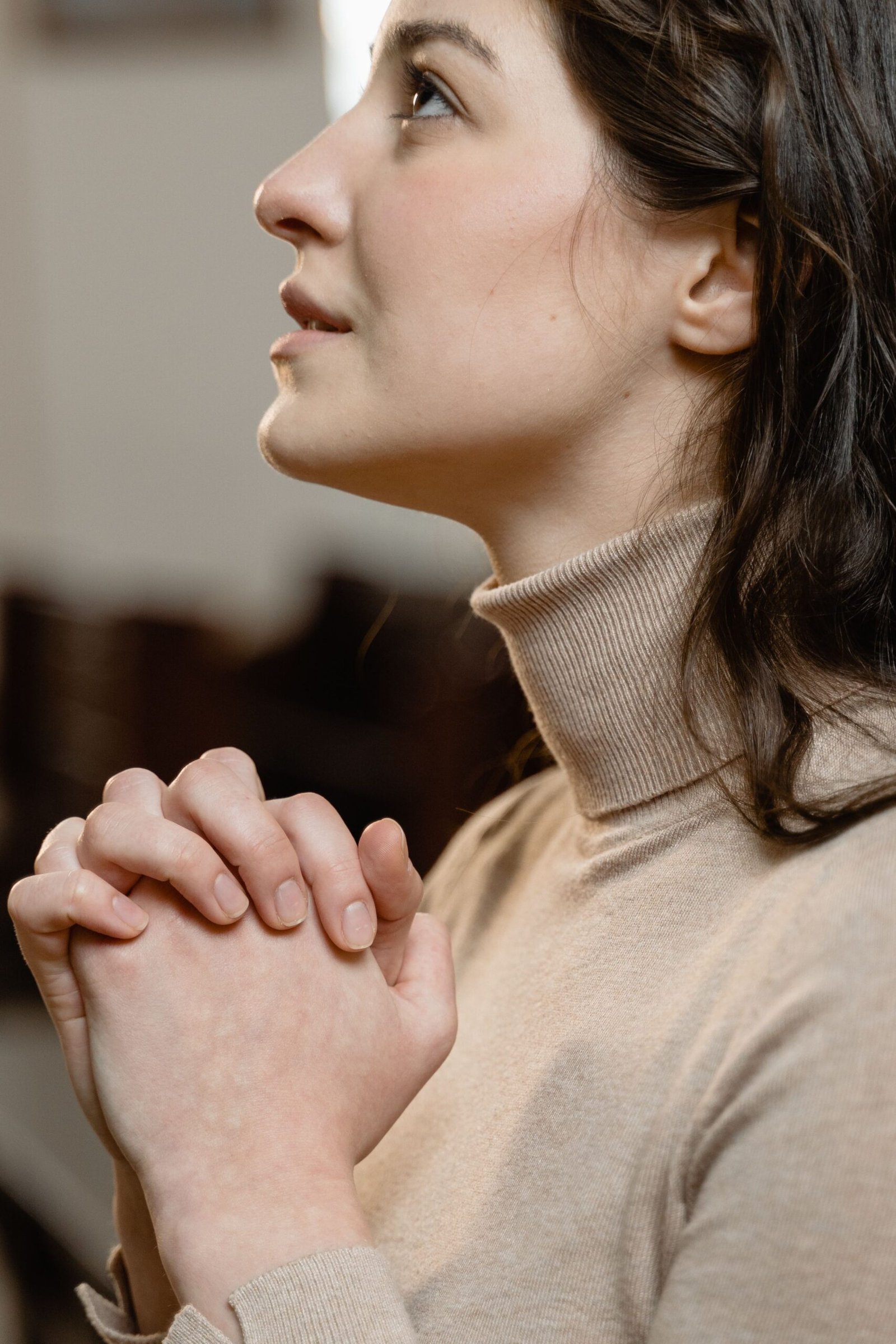
Building a prayer habit is a lot like building any other habit, minus the gym membership guilt when you skip a day. The secret isn’t willpower or some spiritual gift you either have or don’t; it’s just repetition. Same time, same place, same simple routine, until one day you realize you’re doing it without even thinking about it. That’s the goal here, not a perfect prayer life, just a consistent one.
Before you check your phone, before coffee even, just say a quick “good morning, God, thanks for today” while you’re still lying there. If you want a little more structure, try the Morning Offering, a short prayer that basically says “Here’s my whole day, use it well.” You can find the exact wording in the Prayers section of the site if you want something to read off at first. This isn’t about being fully awake and eloquent; it’s about starting your day pointed in the right direction instead of straight into your inbox.
Somewhere around lunch, take one minute to pause. Say a quick Our Father, or just check in honestly with “how’s today going, God, help me with the next few hours.” This is the prayer equivalent of stretching your legs at your desk; it’s short, it’s easy to forget, and it makes a noticeable difference when you actually do it. Set a phone reminder if you need to; there’s no shame in letting technology nudge you toward something good for once.
This is where the real magic happens, and it takes longer than the other two for good reason. Before bed, look back on your day and ask yourself two questions: 1) where did I see God today, and 2) where did I mess up or miss Him completely? You’re not writing a novel here, just noticing. Maybe you were patient with your kid when you didn’t want to be — that counts. Maybe you snapped at a coworker — that counts too. Say a quick prayer of thanks for the good, ask forgiveness for the rough patches, and call it a night. This one habit alone will do more for your spiritual life than almost anything else on this list.
On days when you want to go deeper than the quick check-ins above, lean on ACTS: Adoration (praise God for who He is), Contrition (own up to where you fell short), Thanksgiving (name a few things you’re grateful for), and Supplication (ask for what you or others need). It takes maybe two minutes once you get the hang of it, and it covers all your bases without you having to figure out what to say from scratch every time.
Here’s the truth nobody tells you: some days this will feel powerful, and other days it’ll feel like you’re talking to the ceiling. Both are normal, and neither means you’re doing it wrong. Consistency beats intensity every single time, so don’t ditch the whole plan just because Tuesday felt flat. Five honest minutes a day, every day, will change your spiritual life more than one dramatic hour that never happens again.
When you’re ready to explore more prayers, methods, and ways to deepen this routine, head over to the Prayers section on the website. We’ve got plenty there to help you keep this going long after the new habit excitement wears off.
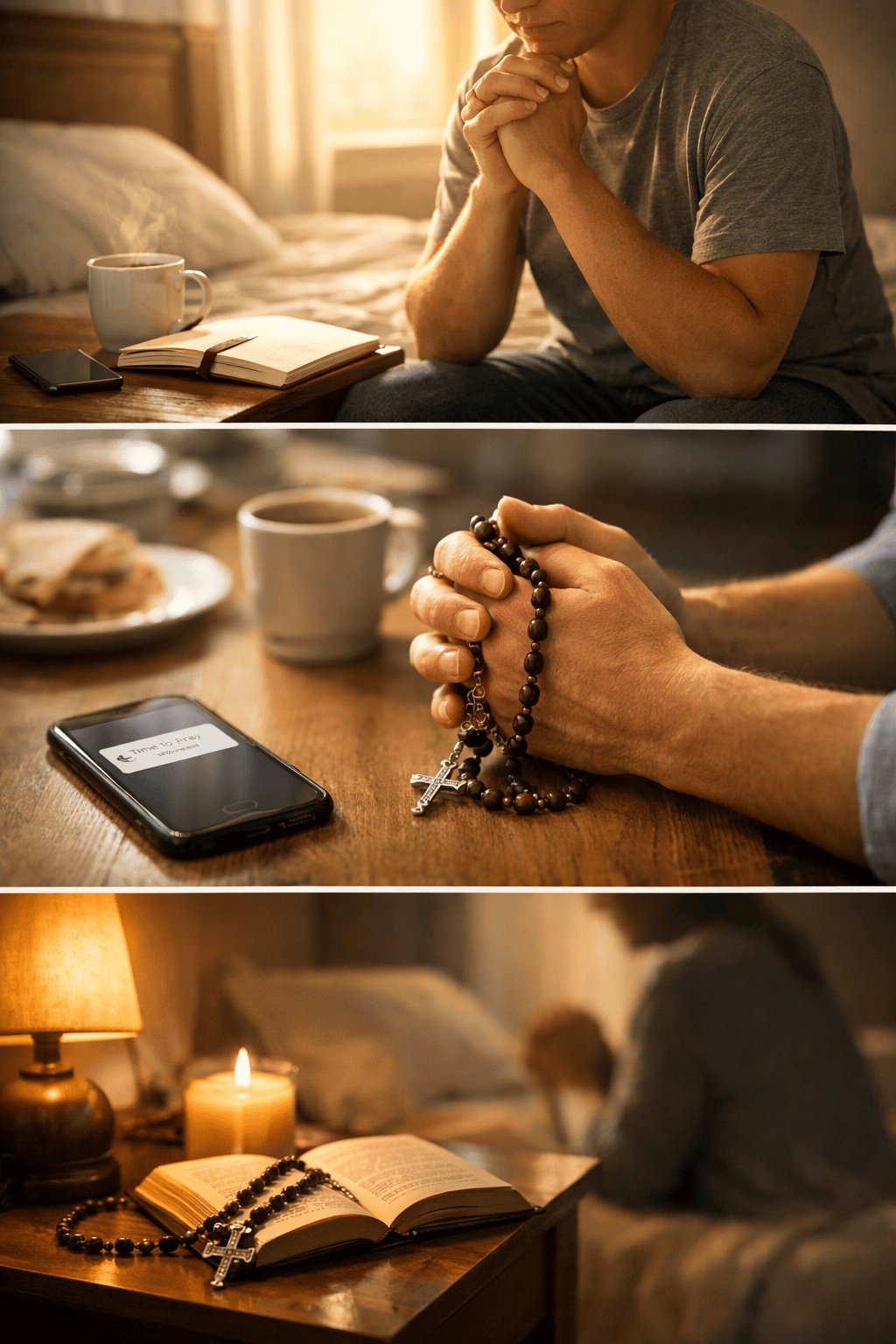
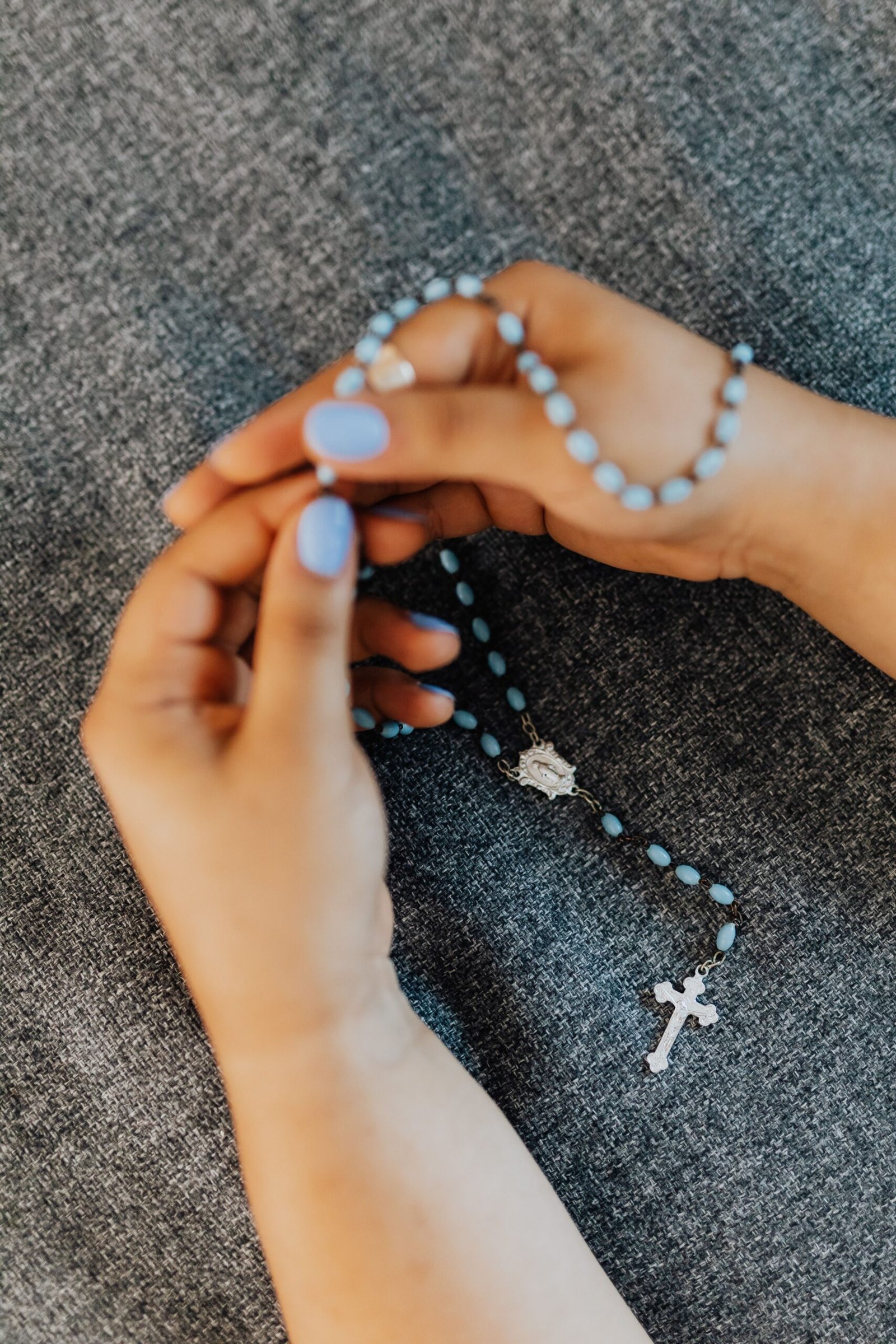
If you’ve ever seen someone holding a string of beads, moving their lips, and looking suspiciously calm, there’s a good chance they were praying the Rosary. It looks complicated from the outside, like some kind of secret code only certain Catholics know, but it’s really just a structured way of praying that combines repetition with reflection. Think of it like a spiritual workout routine, the same moves every time, but the more you do it, the more natural it feels.
The Rosary traces back to the 13th century and tradition credits St. Dominic with popularizing it, though the version we pray today developed over centuries. The word “rosary” literally means “crown of roses,” which sounds fancy until you realize it’s basically saying each prayer is like offering God a flower. The beads themselves are just a counting tool; nothing mystical about the plastic or wood. They just help you keep track so your brain can focus on the words instead of losing count like you’re doing math in the shower.
Here’s how it actually works. You move around the loop praying the Sign of the Cross, the Apostles’ Creed, an Our Father, three Hail Marys, and a Glory Be to start, then you settle into sets of ten Hail Marys called “decades,” each one bookended by an Our Father and Glory Be. While your mouth is on autopilot with those familiar prayers, your mind is supposed to be meditating on a specific moment in the life of Jesus or Mary, called a Mystery. There are twenty of these Mysteries total, split into four sets, Joyful, Sorrowful, Glorious, and Luminous, and different sets are traditionally prayed on different days of the week. So no, you’re not expected to memorize all twenty at once, just pick a day’s set and go.
The genius of the Rosary is that it works whether you’re fully focused or completely distracted thinking about what to make for dinner. The repetition isn’t the point, it’s the container that holds space for you to sit with God for fifteen minutes without needing to come up with your own words the whole time. Some days it’ll feel deep and moving, other days you’ll realize you said three Hail Marys on autopilot without absorbing a word, and that’s fine too, showing up still counts.
If you want a full walkthrough of the Mysteries or a printable guide to keep in your pocket, head over to the Prayers section on the website. We’ve got everything you need to pick it up and actually stick with it.
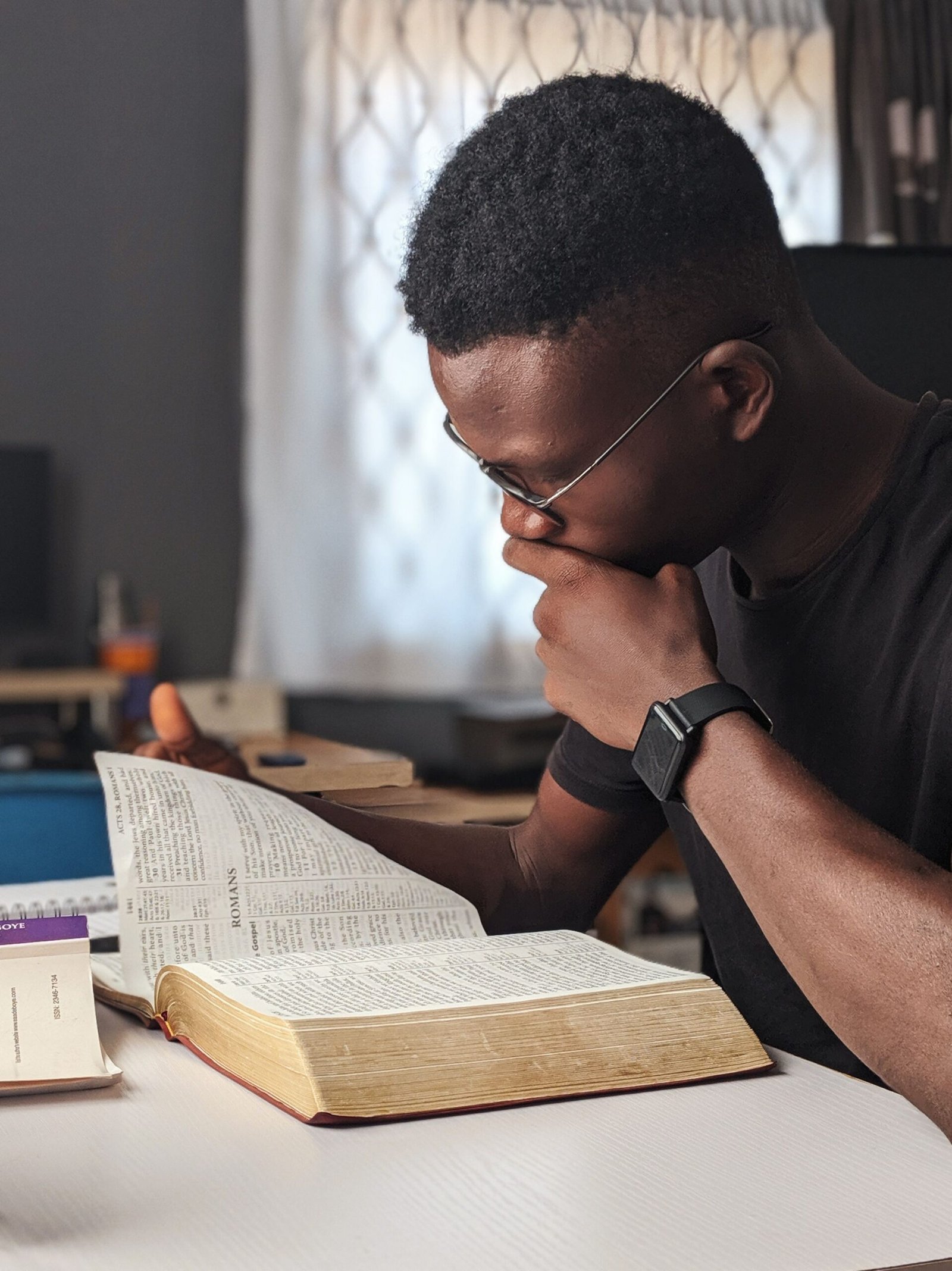
Lectio Divina sounds like a spell from a fantasy novel, but it’s actually just Latin for “divine reading,” and it’s one of the oldest ways Christians have engaged with Scripture. Monks have been doing this since at least the 6th century, so it’s safe to say it’s stood the test of time. The basic idea is simple: instead of reading the Bible like a textbook you’re trying to get through, you read a short passage slowly, multiple times, and let it actually sink in. No highlighters, no note taking for a paper, just you and the text having an actual conversation.
The method breaks down into four steps, and yes, they’re in Latin too, but don’t let that intimidate you, it’s really just a fancy way of saying “read, think, respond, sit quietly.” First comes Lectio, where you simply read the passage slowly, maybe even out loud. Next is Meditatio, where you sit with a word or phrase that jumped out at you and chew on it a bit, kind of like when a song lyric gets stuck in your head except this time it’s actually good for you. Third is Oratio, where you respond to God based on what surfaced, could be gratitude, could be a question, could be “okay, that one stings a little.” Finally there’s Contemplatio, where you just rest in silence, no more talking, just being present with God. Some traditions add a fifth step, Actio, where you carry what you learned into action during your day, because prayer that never leaves the couch is only half finished.
Here’s the part that trips people up: you’re not trying to analyze the passage like a Bible scholar or figure out the historical context of ancient Israelite farming practices. That’s a great exercise for a different day. Lectio Divina is more personal, you’re asking “what is this saying to me, right now, in my actual life” rather than “what did this mean to people thousands of years ago.” Pick a short passage, maybe four to eight verses, because trying to Lectio Divina your way through the entire book of Leviticus in one sitting is a recipe for confusion, not connection.
Give yourself permission to go slow. This isn’t a race, and there’s no prize for finishing quickly, in fact finishing quickly usually means you missed the point entirely. Some days a phrase will hit you like a truck, other days you’ll read the same verse three times and feel nothing, and both outcomes are completely normal. The goal isn’t a dramatic spiritual experience every time, it’s just showing up and letting Scripture actually speak instead of skimming it like a grocery list.
If you want passage suggestions or a simple guide to walk through your first attempt, check out the Scripture section on the website. We’ve got resources there to help you get started without feeling like you need a theology degree first.

Every day Catholics are behind this site, with over 70 years of combined teaching experience, zero pretense, and a genuine love for helping you actually understand your faith.
We’re a group of lay Catholics, which just means we’re not priests or nuns, we’re regular people with jobs, families, and probably too many browser tabs open right now, just like you. What we do have is a combined 70 plus years of experience teaching the faith and helping people actually understand it instead of just memorizing it. Between us, we’ve taught RCIA classes, led Bible studies, answered the same tricky questions about Mary about four thousand times, and occasionally gotten cornered at a family barbecue by an uncle who “has some thoughts about the Catholic Church.” We’ve been in the trenches, basically.
Here’s what gets us out of bed excited about this work, we genuinely love this faith, and we think it deserves better than boring textbooks and confusing jargon nobody bothered to translate into normal human language. Too many people walk away from the Church because nobody explained the “why” behind what we believe, or they never come back because it all seems too complicated to bother figuring out. That’s the whole reason this site exists. Think of us less like distant experts lecturing from a pulpit and more like that one friend who actually knows their stuff and explains it over coffee instead of making you feel like you should already know the answer. We break things down, use plain language, and crack jokes along the way, because reverence and humor aren’t actually enemies, despite what some very serious homilies might have led you to believe.
Whether you’re brand new to the Church, coming back after years away, or you just have questions you’ve been too embarrassed to ask out loud, you’re exactly who we made this for. We built this whole site because we believe understanding your faith shouldn’t require a theology degree, just a little curiosity and someone willing to explain it clearly. So take a look around, and if something doesn’t make sense, that’s completely normal, that’s actually the whole point of being here. Head over to the About section on the website to learn more about our team and what got each of us into this work in the first place.
At A Light for My Journey, we believe faith isn’t meant to stay in the dark corners of confusion or half-remembered Sunday school lessons. Our vision is one of illumination, taking the parts of Catholic teaching that feel murky, complicated, or intimidating and bringing them into the light, so you can actually see where you’re walking instead of stumbling through it.
© 2024 Light for My Journey. All Rights Reserved.